
When you’re planning your kitchen or thinking about replacing your old fridge, one question probably comes to mind: how tall are standard refrigerators? Knowing the right height is crucial because it affects not just the look of your kitchen, but also how easily you can access your food and fit the appliance into your space.
Whether you have a compact kitchen or a spacious one, understanding standard refrigerator heights helps you make the best choice without surprises. You’ll discover the common heights for different types of refrigerators, what factors to consider when measuring, and tips to find the perfect fit for your home.
Keep reading to make sure your new fridge matches your needs perfectly!
No products found.
Credit: www.maytag.com
Standard Refrigerator Heights
Standard refrigerator heights vary to fit different kitchen spaces and needs. Understanding these heights helps in choosing the right fridge. Most refrigerators fall within a common height range. This range suits most kitchens and offers enough storage space.
Average Height Range
Most standard refrigerators measure between 65 and 70 inches tall. This height fits well in kitchens with standard ceiling heights. Compact models can be shorter, around 60 inches. Taller models may reach up to 72 inches or more. These sizes allow for a comfortable fit under kitchen cabinets.
Height Variations By Brand
Different brands offer unique height options. Some brands focus on compact designs for small kitchens. Others provide taller models for larger storage needs. Brand design choices affect the refrigerator’s height and style. Always check the exact height before buying to ensure a proper fit.

Credit: www.angi.com
Refrigerator Types And Their Sizes
Refrigerators come in many styles and sizes. Each type offers unique features and space benefits. Knowing the typical height of each model helps plan your kitchen layout. Here is a guide to popular refrigerator types and their usual sizes.
French Door Models
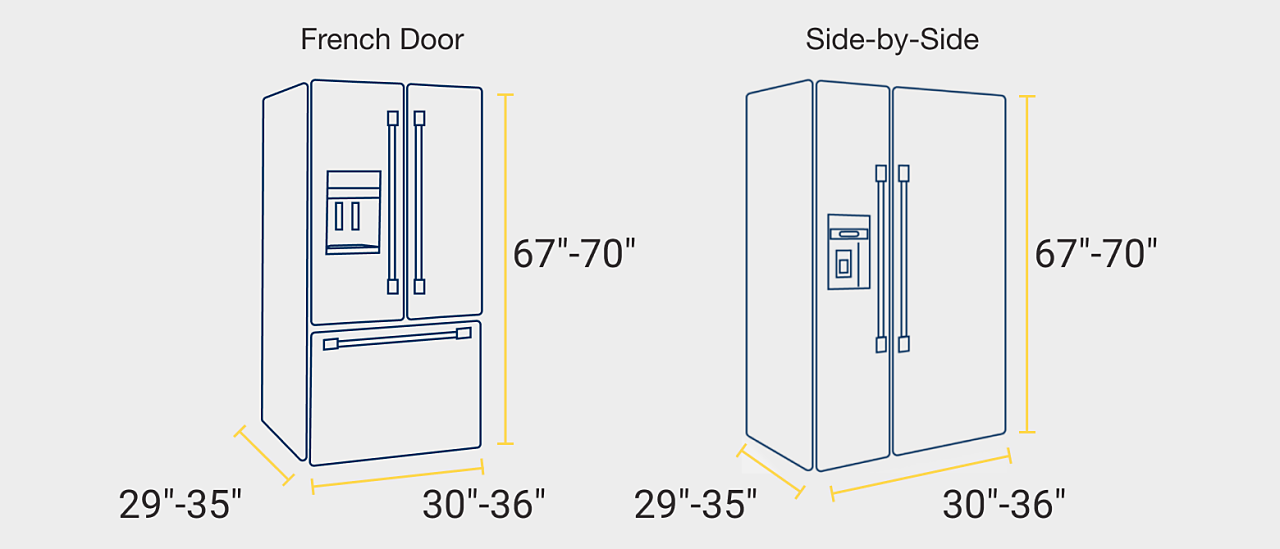
French door refrigerators have two doors on top and a freezer drawer below. They usually stand between 68 and 70 inches tall. These models offer wide shelves and easy access to fresh food.
Bottom Freezer Units
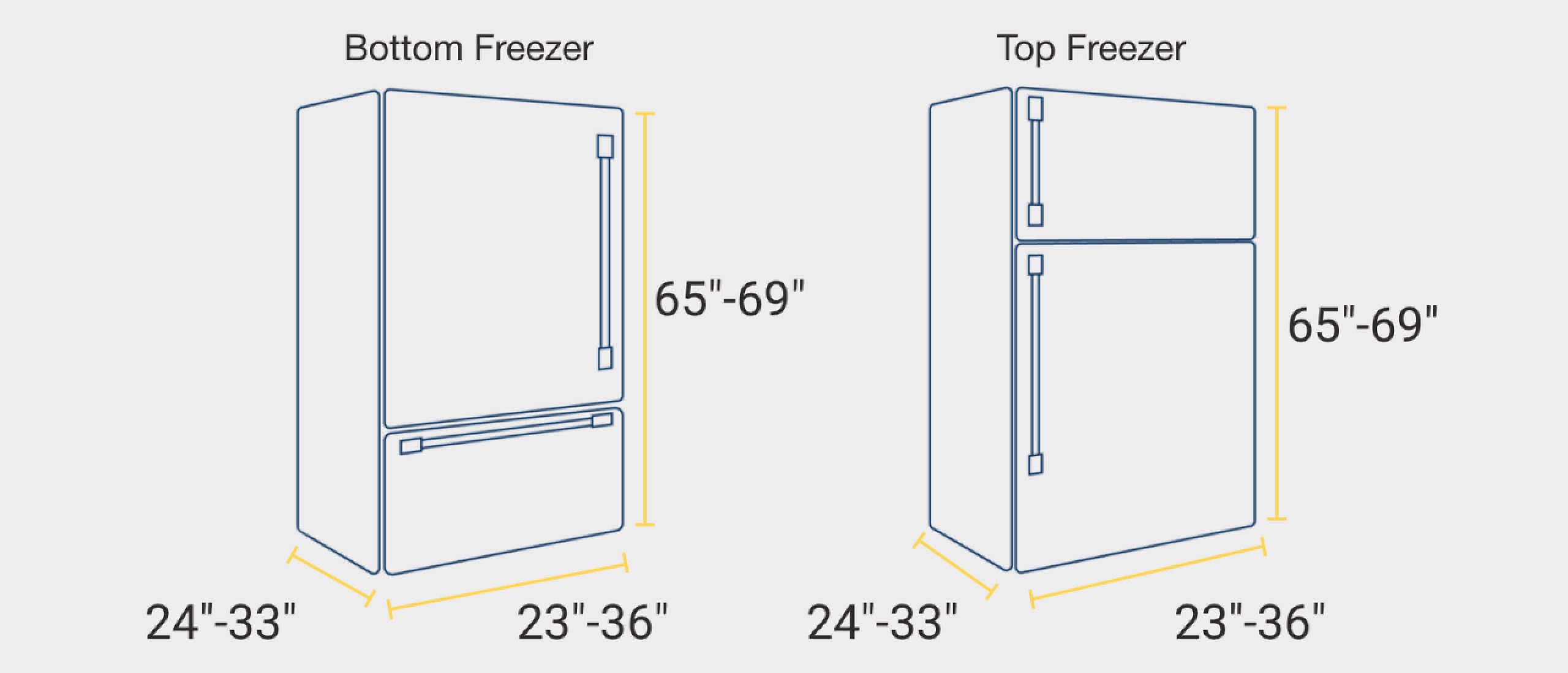
Bottom freezer refrigerators place the freezer at the bottom and fridge on top. Their height ranges from 67 to 70 inches. This design keeps fresh food at eye level for convenience.
Side-by-side Refrigerators
Side-by-side fridges have freezer and fridge compartments next to each other. They typically measure 65 to 70 inches tall. This style fits narrow spaces while offering balanced storage.
Top Freezer Designs
Top freezer models have the freezer above the fridge section. They are often 61 to 67 inches tall. These units are common in smaller kitchens and are budget-friendly.
Counter-depth Options
Counter-depth refrigerators align with your counters for a sleek look. Their height varies, usually between 68 and 72 inches. This style saves space and creates a clean kitchen flow.
Width And Depth Dimensions
Width and depth are key refrigerator dimensions to consider. These measurements affect your kitchen space and appliance fit. Knowing the width and depth helps in selecting the right refrigerator model. It also ensures smooth installation and door clearance.
Common Widths
Most standard refrigerators range between 28 and 36 inches wide. Compact models start around 24 inches. Larger, double-door or French door styles can reach up to 36 inches or more. Choosing the correct width avoids overcrowding your kitchen.
Standard Depths
Typical refrigerator depth varies from 28 to 34 inches. This measurement excludes the door handles. Depth impacts how far the fridge sticks out from cabinets. Standard-depth models extend beyond countertops by a few inches.
Counter-depth Vs Standard-depth
Counter-depth refrigerators align with cabinet edges, usually about 24 to 28 inches deep. They offer a sleek, built-in look in kitchens. Standard-depth fridges are deeper and provide more storage space. However, they may protrude into kitchen walkways.
Choosing The Right Size For Your Space
Choosing the right refrigerator size is important for your kitchen’s function and look. A fridge that fits well makes cooking and cleaning easier. It also keeps your kitchen space open and comfortable. Measuring carefully and considering door space helps avoid problems later. Follow these simple tips to pick a fridge size that suits your kitchen perfectly.
Measuring Your Kitchen Space
Start by measuring the width, height, and depth of the space for your fridge. Use a tape measure and write down the numbers. Check for any nearby cabinets or appliances that might block the fridge. Leave extra space for air circulation, usually about one inch on each side. This helps your fridge work better and last longer.
Door Clearance And Swing
Think about how the fridge doors will open. Make sure there is enough room for the doors to swing fully. Check if the doors will hit walls or cabinets. Some fridges have reversible doors, allowing you to change the swing direction. This feature adds flexibility in tight spaces. Clear door movement prevents damage and makes it easier to use the fridge.
Cabinet Alignment Tips
Match the fridge height with your kitchen cabinets for a neat look. Standard refrigerators are usually 65 to 70 inches tall. Measure your cabinet height and consider adding a cabinet above the fridge for extra storage. Keep the fridge flush with the cabinets to create a smooth line. Proper alignment improves your kitchen’s style and flow.
Factors Affecting Refrigerator Height
The height of a standard refrigerator varies due to several factors. Understanding these factors helps you choose the right fridge for your kitchen space. Different designs, brands, and features all affect refrigerator height.
Style And Design Influence
Refrigerator style plays a big role in its height. Top freezer models tend to be taller and slimmer. Bottom freezer units often have a shorter height but more depth. French door refrigerators usually stand taller to fit two doors side by side. Side-by-side models often come in medium heights. Design choices affect how tall the fridge will be.
Manufacturer Variations
Brands have different size standards. One manufacturer’s standard height might differ from another’s. Some brands focus on compact models for small kitchens. Others produce larger units for families needing more storage. Variations in production methods and target markets cause height differences.
Additional Features Impacting Size
Extra features add to the refrigerator’s height. Water dispensers and ice makers often increase height. Built-in smart technology and larger door bins also affect size. Some models include adjustable shelves that require more vertical space. These features make refrigerators taller than basic models.
Moving And Installing Tall Refrigerators
Moving and installing tall refrigerators requires careful planning and effort. These appliances are heavy and bulky. Proper handling ensures safety and prevents damage. Follow simple steps to make the process easier and safer.
Safety Tips For Moving
Always have at least two people to move a tall refrigerator. Use gloves to protect your hands. Clear the path before moving to avoid tripping. Keep the refrigerator upright to prevent damage to internal parts. Use a dolly or hand truck for better control. Take breaks if the load feels too heavy.
Handling Large Units
Measure doorways and hallways before moving the fridge. Remove all shelves and drawers to lighten the load. Secure the doors with tape or rope to keep them closed. Tilt the refrigerator slightly backward when using a dolly. Avoid sudden movements or sharp turns. Communicate clearly with helpers throughout the move.
Installation Considerations
Choose a spot with enough space for ventilation. Leave at least two inches of space on all sides. Ensure the floor is level to avoid future problems. Connect the water line carefully if the fridge has an ice maker. Plug the refrigerator into a grounded outlet only. Let the fridge sit for a few hours before turning it on.
Credit: www.maytag.com
Frequently Asked Questions
How Tall Is The Average Fridge In Height?
The average fridge height ranges between 65 to 70 inches. French door and side-by-side models often reach 68 to 72 inches tall. Counter-depth refrigerators typically stand around 68 inches. Always measure space carefully to ensure proper fit and door clearance.
Are All Refrigerators 70 Inches Tall?
Not all refrigerators are 70 inches tall. Heights vary by style and brand, typically ranging from 60 to 72 inches. Choose a size that fits your space and needs.
Can Two People Lift A Fridge?
Yes, two people can lift a fridge safely. Use proper lifting techniques, a dolly, and straps to avoid injury and damage.
What Is The Most Common Refrigerator Size?
The most common refrigerator size ranges from 30 to 36 inches in width, 66 to 70 inches in height, and 29 to 35 inches in depth. This fits most kitchens and balances storage capacity with space efficiency.
Conclusion
Standard refrigerators usually stand between 65 and 70 inches tall. Most kitchens fit these sizes well. Always measure your space before buying a fridge. Knowing the height helps avoid delivery and installation problems. Choose a refrigerator that suits both your needs and kitchen size.
This simple step ensures comfort and convenience daily. Keep these points in mind for a smooth purchase. Your kitchen will look balanced and function efficiently.