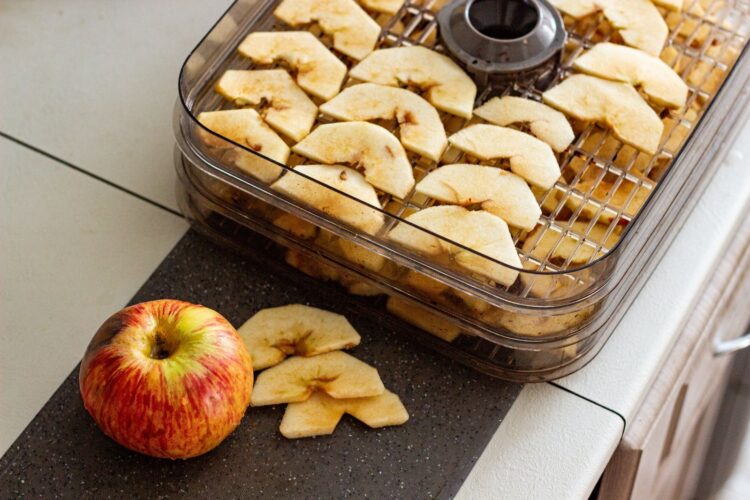
Choosing a dehydrator comes down to how much food you plan to process and how much space you have. Models with stainless steel trays offer better long-term durability, while stackable plastic units often save space. The best choice depends on whether you value batch capacity or a smaller kitchen footprint.
Best overall: Cosori Stainless Steel Dehydrator, which balances 6.5 square feet of drying space with a quiet brushless motor and precise digital temperature control for consistent results.
Most capacity: Magic Mill 15-Tray Dehydrator, perfect for serious home chefs who need to process large batches of jerky or fruit at once without needing to rotate trays manually.
Best for beginners: OSTBA 5-Tray Dehydrator, providing a simple, space-saving design with an easy-to-read LED display that takes the guesswork out of basic drying tasks.
This guide is for anyone looking to preserve their own snacks, herbs, or jerky at home.
How We Picked
We compared 32 different digital food dehydrator listings to find the most reliable options for home use. To earn a spot, each product had to clearly state its motor wattage, temperature range, and tray material. We prioritized models that include clear digital controls and timers, as these features are essential for repeatable results. Any unit lacking basic safety features like overheat protection was excluded from our final selection.
All 10 products side by side — scroll sideways to see every column.
| Best Choice | ||||||||||
| Preview |  |  |  | 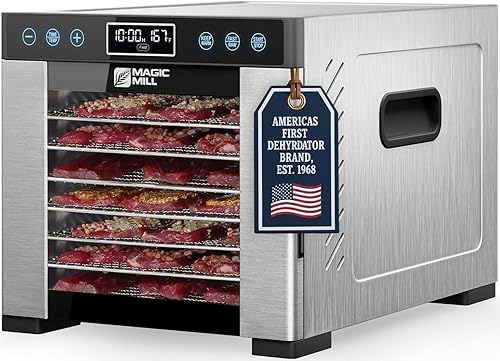 |  |  |  |  |  |  |
|---|---|---|---|---|---|---|---|---|---|---|
| Product | Cosori Stainless Steel Dehydrator | Magic Mill 15-Tray Dehydrator | Excalibur Select Series Dehydrator | Magic Mill Pro Dehydrator | Nesco Snackmaster Pro | Hamilton Beach Digital Dehydrator | Cosori BPA-Free Dehydrator | Elite Gourmet SlimStore Dehydrator | OSTBA 5-Tray Dehydrator | Cosori Food Dehydrator |
| Brand | Cosori | Magic Mill | Excalibur | Magic Mill | NESCO | Hamilton Beach | Cosori | Elite Gourmet | OSTBA | Cosori |
| Best for | Best Overall | Most Capacity | Best Professional Performance | Most Powerful Airflow | Best for Snacks | Simplest to Use | Best Compact Design | Best Space-Saving Storage | Best for Beginners | Recommended |
| The listing says | 6 stainless steel trays, 6.5 ft² space 600W motor with rear-mounted fan | Rear-mounted fan, 15 XL trays 95°F to 167°F, 48-hour timer | 8 chrome trays Compact design with large capacity | Full stainless steel construction 100% stainless steel trays | 600W power, even heat distribution 90°F to 160°F digital temperature control | 5 stackable BPA-free trays, 4.2 ft² 100-160ºF, 48-hour timer, auto shutoff | 95-165 °F, 48-hour timer Expandable to 7 trays | 95ºF to 158ºF adjustable temperature 48-hour timer in 30-minute increments | LED digital touchscreen control panel 95℉ to 158℉, 72-hour timer | Black door design 95–165 °F, 48-hour digital timer |
| More information | Price on Amazon | Price on Amazon | Price on Amazon | Price on Amazon | Price on Amazon | Price on Amazon | Price on Amazon | Price on Amazon | Price on Amazon | Price on Amazon |
1. Cosori Stainless Steel Dehydrator
Best for: Families needing consistent, quiet, and large-batch drying.
The Cosori Stainless Steel Dehydrator provides 6.5 square feet of drying space across six trays. Its 600W motor and rear-mounted fan work together to circulate air, meaning you don’t have to move trays around during the drying process. The quiet operation, rated below 48 dB, makes it suitable for running overnight without creating noise disturbances.
You can set the timer for up to 48 hours and choose your temperature between 95°F and 165°F. Use the digital control panel to dial in these settings down to the exact degree. This precision ensures consistent results regardless of the food type.
If you’re dehydrating delicate herbs, stick to the lower end of the temperature range. For meat jerky, use the higher settings to ensure safety and proper texture. Many users make the mistake of overloading the trays, which blocks the upgraded airflow technology. To avoid this, ensure there’s enough space between food items for the air to circulate freely.
Pros
- Quiet brushless motor operation
- Large 6.5 ft² drying area
- Includes fruit roll sheet
Cons
- Large footprint on counters
2. Magic Mill Premium Food Dehydrator Machine
Best for: Serious home chefs processing massive quantities.
This model is built for high-volume drying, featuring 15 extra-large stainless steel trays. The 800W motor and rear-mounted fan ensure air flows evenly across every tray, so you can fill it to capacity without worrying about uneven results. A transparent door allows you to watch the progress without opening the unit and losing heat.
If you’re just drying a few herbs, this machine is likely overkill for your needs. It’s designed specifically for people who regularly make large batches of jerky or fruit snacks. If your kitchen counter space is limited, measure your area first; this unit’s 15-tray footprint is substantial. The inclusion of a “Keep Warm” function adds convenience by holding food at the ideal serving temperature for 24 hours after the 48-hour drying cycle ends.
If the machine overheats, the automatic shut-off and overheat protection will engage to preserve the unit. When cleaning, place the stainless steel trays directly into the dishwasher, but remember to wipe the housing down manually with a damp cloth.
Pros
- Massive 15-tray capacity
- Powerful 800W motor
- Keep Warm function included
Cons
- Takes up significant space
3. Excalibur Food Dehydrator Select Series
Best for: Professionals requiring precise, consistent airflow.
The Excalibur Select Series Dehydrator uses patented Hyperwave Pulse Technology to manage moisture levels effectively. Its horizontal airflow system ensures that all 8 chrome trays dry at the same rate, eliminating the need to rotate them. The clear glass French doors provide a professional look and easy monitoring.
This machine is ideal for those who want high-level performance for specialty items like jerky or delicate herbs. Set the adjustable thermostat anywhere from 85°F to 165°F to match the density of your ingredients. If you’re drying high-moisture fruits, use the lower end of that range for longer periods to prevent case hardening. If you’re processing meat for jerky, lean toward the higher settings to ensure safety.
Pros
- Patented airflow technology
- Clear glass French doors
- Large 8-tray capacity
Cons
- Higher learning curve for settings
4. Magic Mill Pro Food Dehydrator Machine
Best for: Users wanting a fully stainless steel interior.
The Magic Mill Pro Dehydrator stands out because it uses stainless steel for both the exterior and the interior. This build quality is designed for long-term use and heat retention. Its 600W rear-mounted fan provides consistent drying, which is helpful for those who want to set their timer and walk away.
If you’re drying delicate herbs, use the lower end of the 95–176°F range. For jerky or chewy snacks, push the dial toward the maximum 176°F setting. Avoid the mistake of rotating your trays; the rear-mounted fan eliminates hot spots, so you can leave the machine undisturbed. If you’re drying overnight, the 48-hour timer and auto-shutoff provide safety. If the unit detects an internal temperature spike, the overheat protection will trigger automatically.
Pros
- Full stainless steel construction
- Precise 1-degree temperature control
- Automatic shutoff safety feature
Cons
- Heavy to move around
5. Nesco FD-79 Snackmaster Pro Digital Food Dehydrator
Best for: Snack enthusiasts wanting a compact, expandable system.
The Nesco Snackmaster Pro is a versatile, expandable unit that starts with four trays and can grow to 12. Its 600 watts of power provides consistent drying that’s four times faster than many standard units. You can set the digital temperature between 90°F and 160°F to match the specific needs of meat, fruit, or herbs.
The “Vitasave” opaque exterior is a unique feature designed to block light, which helps keep nutrients in your food during the drying process. If you value nutrient retention over visual monitoring, this design is a clear advantage. However, if you prefer to see your food while it dries, the opaque shell will be a drawback because it hides your progress.
This dehydrator is made in the USA, with only the powerhead imported from China. It’s a great fit for people who want to start small and add more capacity later by purchasing extra trays. You won’t need to rotate these 13 1/2-inch trays during use. The package includes two fruit roll sheets, two clean-a-screens, jerky seasoning, and a 52-page recipe book to get you started.
Pros
- Expandable up to 12 trays
- Opaque exterior protects nutrients
- Includes recipe book and accessories
Cons
- Opaque shell hides progress
6. Hamilton Beach Digital Food Dehydrator
Best for: Simple, everyday snack preparation.
The Hamilton Beach Digital Dehydrator is designed for ease of use. It features five stackable, BPA-free trays and a clear vented lid, allowing you to monitor your snacks without disrupting the drying process. The 500W base-mounted heater provides consistent airflow, so you can stack the trays and let it run without rotating them.
This unit is a great entry point for those who want to make fruit leather or veggie chips without complicated settings. You can adjust the temperature from 100 to 160ºF and set the digital timer for a full two days of continuous operation. If you’re drying herbs, use the included mesh screen; for fruit leather, use the solid sheet.
If you’re drying very thick items, the stackable tray design might feel restrictive compared to shelf-style models. Avoid using high-heat sanitizing cycles, as these can damage the plastic components. When finished, place the trays and lid directly into the dishwasher for quick cleanup, though you must hand wash the delicate mesh screen. The unit’s nonslip feet keep it stable on your countertop, and its compact frame fits easily beneath standard kitchen cabinets.
7. Cosori BPA-Free Dehydrator
Best for: Small kitchens needing a compact footprint.
The Cosori BPA-Free Dehydrator is a circular unit that arrives with five BPA-free trays. While it starts small, you can expand it to seven trays by adding the CFD-TR051-WUS set. This flexibility makes it a practical choice for apartments or homes with limited counter space.
The machine reaches 165°F, which provides a safer margin for beef jerky than the 158°F limit found on many competing models. You can dial in the heat in 1°F increments and set the timer in 30-minute blocks for a full two days of continuous operation. If you’re drying thick-cut ingredients, use the adjustable tray height feature to prevent overcrowding.
Because the unit operates at less than 47 dB, it’s quiet enough to run while you sleep. However, avoid this model if you process massive harvests from a large garden. The trays have an inner diameter of 11.6 inches, which limits the total volume per batch. Unlike fragile clear-shell units, this model uses solid materials designed for long-term durability.
Pros
- Adjustable tray height
- Quiet operation (under 47 dB)
- Expandable to 7 trays
Cons
- Smaller overall drying area
8. Elite Gourmet Digital Food Dehydrator
Best for: Small spaces requiring clever storage.
The Elite Gourmet SlimStore Dehydrator is built specifically for people with limited storage. Its multiple trays are designed to collapse and nest together, drastically reducing the space the unit takes up in a pantry. It uses a base-mounted fan to distribute heat evenly across the entire stack of trays.
This unit is excellent for those who only dehydrate occasionally and need to store the appliance away between uses. If you’re preparing snacks like dried fruits or herbs, the adjustable 95ºF to 158ºF temperature range provides the precision needed for optimal results. However, if you’re processing large amounts of meat for jerky, you may find the compact size limits your output.
Avoid the mistake of overloading the trays, as the directed airflow requires space to circulate efficiently.
Pros
- Collapsible trays for storage
- BPA-free materials
- Simple 30-minute timer increments
Cons
- Not ideal for large batches
9. OSTBA 5-Tray Dehydrator
Best for: Beginners who want a simple experience.
The OSTBA 5-Tray Dehydrator features a responsive LED touchscreen that makes it very easy to set your time and temperature. The see-through window allows you to check on your progress without stopping the cycle. It’s a compact, stackable unit that fits well on most countertops.
If you’re dehydrating delicate herbs or flower tea, stick to the lower end of the 95℉ to 158℉ range to preserve nutrients. For meat jerky, always use the higher settings to ensure safety. Beginners often make the mistake of overloading the BPA-free trays, which blocks the 360° airflow and leads to uneven drying.
This dehydrator is ideal for someone who is new to the process and wants a straightforward machine. It covers the basics well, including a timer that goes up to 72 hours. Because it’s a smaller unit, it’s best suited for light, occasional use rather than heavy-duty, daily food preservation.
Pros
- Easy-to-use LED touchscreen
- See-through monitoring window
- Compact footprint
Cons
- Basic capacity for small batches
10. Cosori Food Dehydrator
Best for: Users who like the stainless steel look.
This version of the Cosori food dehydrator features a stylish black door while maintaining the same 6.5 square feet of drying space as the classic model. It includes six stainless steel trays that are dishwasher safe, making cleanup simple after a long drying session.
You can set the digital touch-control panel for a full two days of continuous operation. If you’re drying delicate herbs, set the temperature to the low end of 95 °F. For tougher tasks like jerky, push the heat up to 165 °F.
This unit is perfect for those who want the performance of the Cosori stainless steel line but prefer a different aesthetic. Like the other Cosori models, it includes safety features like automatic shutoff and overheat protection. If you’re already familiar with the brand, this will feel like a comfortable and reliable choice for your kitchen.
Pros
- Stylish black door design
- Durable stainless steel trays
- ETL listed for safety
Cons
- Similar performance to previous model
How to Choose in Sixty Seconds
Which tray material is best?
Stainless steel is preferred for durability and heat retention. It is easier to clean and resists the wear that can occur with other materials. Always confirm the trays are dishwasher safe if you want to keep cleanup simple. According to the U.S. Department of Agriculture, proper cleaning of your equipment is vital to prevent bacterial growth during the drying process.
Does the fan placement matter?
Yes, fan placement dictates how much work you have to do during the drying process. A rear-mounted fan pushes air horizontally across all trays, which usually ensures even drying without needing to rotate them. Base-mounted fans, often found in circular or stackable units, push air upwards. This can sometimes lead to uneven drying where the bottom trays dry faster than the top ones, requiring you to manually rotate them. If you prefer a “set it and forget it” experience, a rear-mounted fan system is almost always the superior choice for consistent results across large batches.
How much power do I actually need?
Power is measured in watts, and it directly affects how quickly the dehydrator can reach and maintain its target temperature. A unit with 500W to 800W is generally sufficient for most home tasks, including jerky, fruit, and herbs. Higher wattage doesn’t always mean better quality, but it does mean the unit can handle larger loads more efficiently. Always match the power level to the volume of food you intend to process at one time.
Frequently Asked Questions
What maintenance does my dehydrator require?
Most digital dehydrators require minimal maintenance, though cleaning is essential. You should wipe the interior housing with a damp cloth after each use to remove crumbs or oils. Check your manual to confirm if your specific trays are dishwasher safe.
Can I leave my dehydrator running while I sleep?
Yes, most modern digital dehydrators are designed to run for long periods and include safety features like automatic shutoff and overheat protection. These units are built to operate unattended for recipes that take a full day or two. Always place the unit on a heat-resistant surface in a well-ventilated area.
What is the most common mistake when dehydrating?
The most common mistake is overloading trays or overlapping food, which restricts airflow and leads to uneven drying. Food should be placed in a single layer with space between pieces for air to circulate. Follow recipe guidelines for temperature and time to ensure food is preserved safely.
Is the simplest dehydrator on the list enough?
For basic tasks like drying fruit, herbs, or occasional jerky, a simpler model is often sufficient. Units like the OSTBA 5-Tray or Hamilton Beach Digital Dehydrator provide essential features like digital timers and adjustable temperatures. Only consider high-capacity machines if you are processing large harvests or making jerky weekly.
Closing
The Cosori Stainless Steel Dehydrator remains the top recommendation for most users because it offers a perfect balance of 6.5 square feet of drying space, quiet operation below 48 dB, and reliable stainless steel construction. For those who need maximum capacity, the Magic Mill 15-Tray Dehydrator is the clear winner for handling large harvests or big batches of jerky with its 800-watt motor.
If you’re just starting out and want something simple that won’t take up your entire counter, the OSTBA 5-Tray Dehydrator is a great place to begin. However, be aware that smaller, stackable units often require more careful monitoring compared to models with rear-mounted fans that eliminate the need for tray rotation.
Once you have selected the model that fits your space and needs, consider picking up a few extra mesh sheets. These are essential for drying smaller items like herbs or berries, which would otherwise fall through standard tray grates.